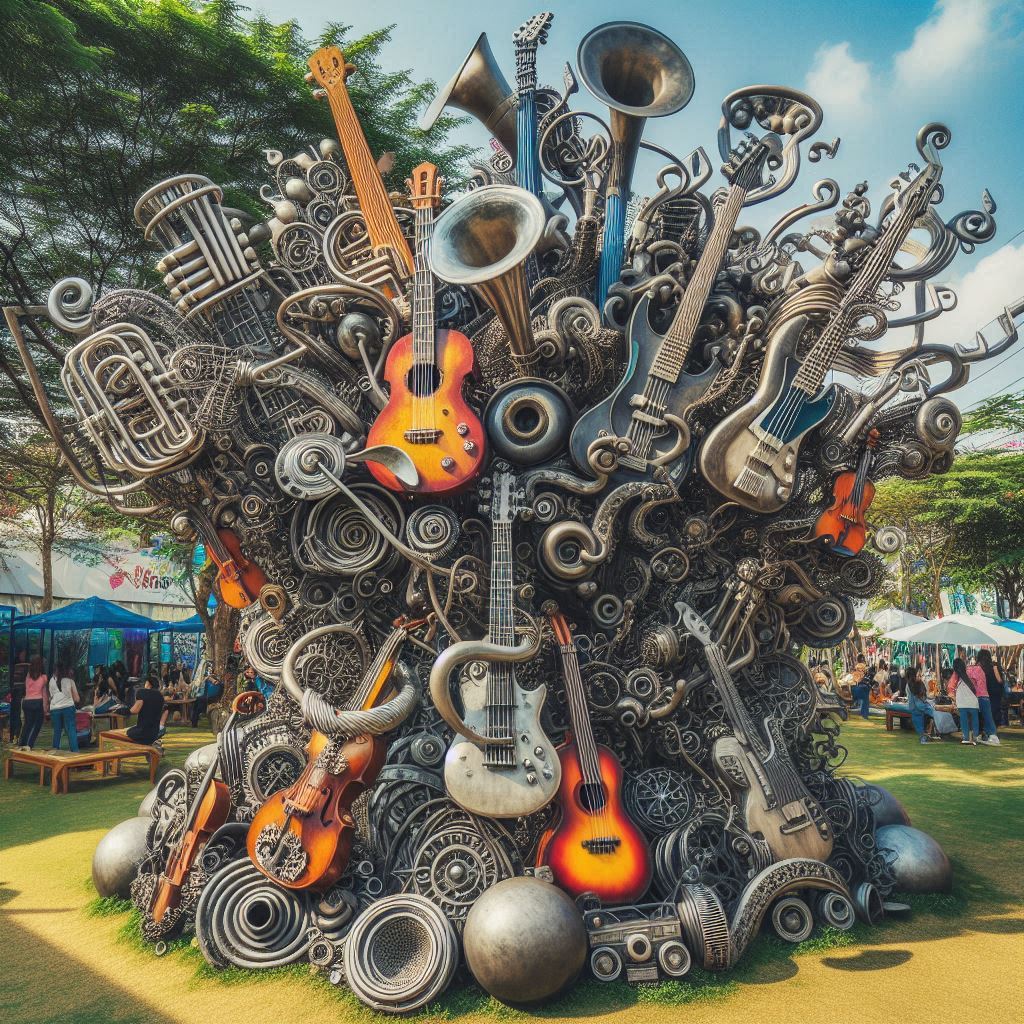
Suno AI transcends the limits of traditional musical creation by offering a revolutionary approach through the use of structured tags. These tags make it possible to guide the artificial intelligence to produce unique, personalized musical pieces.
- [Intro]: Set the mood with a gentle melody or a captivating rhythm.
- [Verse]: Develop a narrative or a theme.
- [Pre-Chorus]: Increase the tension to prepare the chorus.
- [Chorus]: The highlight, with a catchy, emotional melody.
- [Bridge]: Introduce a variation or a contrast before returning to the chorus.
- [Outro]: End on a striking or soothing note.
Structure and tags for writing with Suno AI
Discover infinite musical horizons with Suno AI
Musical creation is a universal art that transcends borders, cultures and eras. With Suno AI, the possibilities become literally unlimited. This revolutionary platform harnesses the power of artificial intelligence to bring to life sounds, styles and compositions you might never have considered. Let us explore, in a 3000-word immersion, how Suno paves the way toward ever vaster and more inspiring musical universes.
Fuse genres to invent unheard-of sounds
Suno’s strength lies in its ability to fuse genres, whether conventional or daring. Imagine a piece combining the orchestral grandeur of jazz with the modern arrangements of electronic music. Or a revisited folk tinged with synthetic accents that evoke a blend of acoustic authenticity and digital modernity.
Examples of daring blends:
- Orchestral jazz: Bring the power of brass with a harmonious string section for a lush sound experience.
- Synthetic folk: Explore traditional melodies enriched by atmospheric synthesizers.
- Electro-reggae: Pair vibrant island rhythms with deep electro bass for a captivating groove.
- Symphonic trap: Combine current percussive beats with orchestral instruments for a cinematic rendering.
Draw inspiration from cultures around the world
The universality of music rests on its ability to reflect humanity’s cultural diversity. Suno AI lets you explore this richness by integrating instruments and styles from different traditions.
Emblematic instruments to explore:
- Indian sitar: With its captivating sonorities, it is perfect for creating a spiritual or mystical atmosphere.
- African kora: This West African string instrument can add melodic softness and a poetic dimension to your pieces.
- Argentine bandoneon: Specific to tango, it lends a passionate, melancholic touch.
- Japanese shamisen: The distinct sonorities of this traditional Japanese instrument can transport your compositions toward soundscapes imbued with serenity.
✨ Use idea: “Compose a song inspired by Indian festivals, with a sitar, tabla percussion and an airy synthetic melody that evokes the union between tradition and modernity.”
Create rich, complex emotional textures
Music is a powerful emotional vehicle. Suno lets you manipulate sound textures to convey complex, multidimensional emotions.
Possible emotional combinations:
- Radiant but introspective: Combine luminous melodies with introspective, contemplative lyrics.
- Dark and captivating: Pair heavy, deep bass with ethereal synth pads for a mysterious ambience.
- Joyful but nostalgic: Create a striking contrast between cheerful rhythms and harmonies recalling past memories.
- Dramatic but soothing: Experiment with orchestral crescendos followed by suspended silences to establish a calming tension.
Structures and tags to guide your compositions with Suno
Suno does not just compose: it gives you the tools to structure your creations in a coherent, captivating way. Here is an enriched structure you can personalize according to your needs:
- Introduction: Start with an immersive ambience. A gentle piano or light percussion can set the tone.
- Verse: Develop your story or your main theme through introspective lyrics or enriched melodies.
- Pre-chorus: Add tension and prepare the ground for the piece’s culminating point.
- Chorus: Insert the most memorable, catchy part, where emotions and intensity converge.
- Bridge: Bring a contrast or a variation to surprise and captivate the listener.
- Outro: Offer a striking conclusion, whether explosive or gentle.
✨ Example of a tagged prompt: [Intro – Ethereal choirs with electronic pads] [Verse – Introspective melody on acoustic guitar] [Chorus – Uplifting melody with a punchy bass and dramatic violins] [Bridge – Airy synths with vocal pads]
Explore innovative sound scenarios
Let Suno AI take you into musical universes that tell powerful stories. Each piece becomes a sound canvas rich in details and nuances.
Unique musical scenarios:
- A soundtrack for a journey through space: Use modular synths and echo effects to illustrate cosmic infinity.
- A tribute to ancient eras: Mix instruments like the harpsichord or the lute with modern elements.
- A lively urban night: Pair heavy, fast beats with recordings of street sounds to capture the energy of a metropolis.
✨ Inspired prompt: “Create an electro-cinematic composition inspired by the galaxies, with expanding sounds and violins in crescendo.”
An opening to creative collaborations
Suno is also a collaborative platform. It encourages the sharing of ideas between artists and makes it possible to co-create pieces that fuse different creative visions.
Possible collaborative uses:
- A composer can initiate a piece and leave to a singer the task of writing suitable lyrics.
- A team of producers can experiment with different musical structures in real time.
- Artists can blend their cultural inspirations to create a piece celebrating diversity.
The future of musical creation with Suno
By integrating Suno AI into your creative process, you push the limits of the possible while opening a door onto an infinite sound universe. Each note, each harmony, each ambience becomes an invitation to explore new horizons.
1. [Intro] – The opening
The introduction is an essential gateway to captivate the listener from the first seconds. It must set the mood and establish the tone of the piece.
- Example of use: [Intro – Atmospheric piano]: A gentle, dreamy melody, accompanied by rain sounds in the background to create a soothing emotion.
- Tips:
- Favour a minimalist beginning to capture attention immediately.
- Use atmospheric sounds or light chords.
2. [Verse] – The narrative heart
The verse introduces the story or the message of the piece. It is a section where emotions begin to develop.
- Example of use: [Verse – Acoustic guitar]: A catchy melody with introspective lyrics accompanied by warm chords.
- Tips:
- Emphasize lyrics that tell a story.
- Play with varied chord progressions to maintain interest.
3. [Pre-Chorus] – The rise in tension
This section serves as a transition to prepare the listener for the chorus.
- Example of use: [Pre-Chorus – Synth in crescendo]: A progressive effect that increases tension and curiosity before the explosive chorus.
- Tips:
- Add percussion or harmonic changes to intensify the energy.
- Experiment with vocal harmonies to enrich the sound.
4. [Chorus] – The highlight moment
The chorus is often the most memorable part of the piece. It is designed to captivate and stay in the listener’s mind.
- Example of use: [Chorus – Powerful choirs and rhythmic drums]: A catchy melody that incorporates vocal harmonies and strong percussion for maximum impact.
- Tips:
- Bring out the song’s main emotion.
- Integrate melodies and lyrics that are easy to remember.
5. [Bridge] – The musical variation
The bridge is a section of contrast that brings a new dimension to the song before returning to the chorus.
- Example of use: [Bridge – Violins and minimalist piano]: A contemplative pause that slows the tempo for an introspective moment.
- Tips:
- Offer an emotional or harmonic rupture to surprise the listener.
- Vary the instruments or change the rhythm to create a significant contrast.
6. [Hook] – The memorable signature
The hook is a short repetitive phrase or melody that gives a strong identity to the song.
- Example of use: [Hook – Female voice in a loop]: A repeated sung phrase that anchors the identity of the piece.
- Tips:
- Place the hook after the chorus or as the song’s opening.
- Make it simple but impactful so it stays in memory.
7. [Breakdown] – The return to the essential
The breakdown strips the song of its complex elements to highlight a minimalist ambience.
- Example of use: [Breakdown – Light electronic beats and deep bass]: A transition with few instruments to reintroduce the main elements afterward.
- Tips:
- Use this section to give dynamics back to the structure.
- Experiment with isolated elements, like a voice or a single instrument.
8. [Coda] – The elegant conclusion
The coda is a way of ending the song gently or with a final intensity.
- Example of use: [Coda – Orchestral ensemble]: A masterful finish with an instrumental crescendo.
- Tips:
- Take up elements of the chorus to give a feeling of conclusion.
- Add echoing sounds or reverberation for a lasting effect.
9. [Outro] – The final resonance
The outro leaves a striking impression after the end of the piece.

- Example of use: [Outro – Acoustic guitar in fade-out]: A gradual descent toward silence, leaving the listener in gentle reflection
- [Hook]
- [Magnetic Melody] / [Circular Theme] – [Key: D minor] [repetitive motif]
- [Crisp Drums] / [Echoed Vocals] – [Key: E flat major] [addictive energy]
- [Driving Beat] / [Strong Leads] – [Key: F# minor] [chorus highlight]
- [Drop]
- [Bass Explosion] / [Layered Synths] – [Key: G# minor] [hypnotic rhythm]
- [Sudden Silence] / [Vocal Resurgence] – [Key: B flat major] [pulsing reentry]
- [Melodic Chaos] / [Percussion Wildness] – [Key: A major] [intense vibe]
- [Breakdown]
- [Stripped Instrumentals] / [Soft Keys] – [Key: E minor] [reflective silence]
- [Raw Beat] / [Ambient Noise] – [Key: C minor] [growing tension]
- [Isolated Rhythms] / [Subtle Vibrations] – [Key: G major] [emotional pause]
- [Coda]
- [Majestic Return] / [Layered Choir] – [Key: F# major] [final harmonics]
- [Cinematic Finale] / [Rolling Strings] – [Key: B minor] [grand resolution]
- [Fading Notes] / [Echoing Synths] – [Key: A flat major] [lasting impression]
- [Outro]
- [Dissolving Harmony] / [Lush Ambience] – [Key: G minor] [calming fade]
- [Mellow Drones] / [Soft Guitar] – [Key: C# major] [soothing end]
- [Whispered Goodbye] / [Gentle Strings] – [Key: E flat minor] [emotional close]
- [Fin]
- [Resonating Silence] / [Lingering Pads] – [Key: D major] [open-ending tone]
- [Subtle Fade] / [Dimmed Percussion] – [Key: A minor] [mystery left behind]
- [Final Echo] / [Last Chord] – [Key: F# minor] [memorable conclusion]